

The Premier Solution for Industrial VOC Abatement: A Deep Dive into Regenerative Thermal Oxidizers (RTOs)
2025-12-16
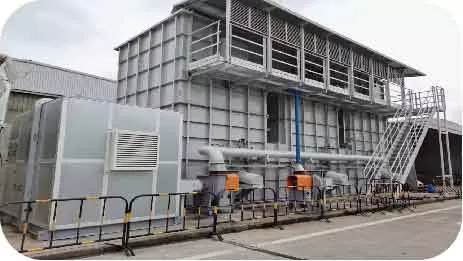
As global environmental regulations become increasingly stringent, the effective control of industrial Volatile Organic Compounds (VOCs) has transitioned from a compliance issue to a cornerstone of sustainable corporate operations. VOCs are significant precursors to photochemical smog and fine particulate matter (PM2.5), posing risks to both public health and the environment. Among the array of end-of-pipe abatement technologies, the Regenerative Thermal Oxidizer (RTO) has emerged as a preeminent solution, celebrated for its exceptional performance, economic viability, and robust safety features. This article provides an in-depth exploration of RTO technology, its core advantages, and a comparative analysis against other thermal treatment methods, offering a professional guide for industrial decision-makers.
Understanding Regenerative Thermal Oxidizers (RTOs)
A Regenerative Thermal Oxidizer is a highly efficient air pollution control device designed to destroy VOCs and other airborne toxins. Its fundamental principle involves heating the process exhaust gas to a very high temperature (typically 760°C to 850°C) and maintaining it for a sufficient residence time (≥1.2 seconds) to chemically oxidize the organic constituents into harmless carbon dioxide (CO₂) and water (H₂O) [14].
The defining feature of an RTO is its remarkable heat recovery system. The unit contains multiple chambers filled with ceramic media, which act as heat reservoirs. In a typical three-chamber cycle, incoming process gas is preheated by passing through a hot ceramic bed that was heated during the previous cycle. After passing through the combustion chamber for complete oxidation, the purified, hot gas releases its thermal energy to a cooler ceramic bed before being exhausted. This regenerative cycle, which includes a purge step to clear any untreated gas, allows the RTO to achieve thermal efficiencies exceeding 95%, drastically reducing the need for auxiliary fuel and lowering operating costs [15].
Modern RTOs are the product of continuous innovation, evolving from early two-chamber designs to the industry-standard three- or five-chamber units and advanced rotary models. This evolution has consistently improved performance, reliability, and operational footprint.
Key Technical Specifications
The design of an RTO system is tailored to specific process conditions, but benchmark specifications highlight its capabilities:
Parameter | Specification | Note |
Destruction & Removal Efficiency (DRE) | ≥99% | Ensures compliance with the most stringent regulations. |
Thermal Efficiency | ≥95% | Minimizes fuel consumption and operating costs. |
Operating Temperature | 760°C - 850°C | Adjustable to suit varying VOC compositions. |
Gas Residence Time | ≥1.2 seconds | Guarantees complete oxidation of contaminants. |
Operational Flexibility | 30% - 115% of nominal flow | Adapts to fluctuations in production volume. |
System Pressure Drop | ≤3000 Pa | Indicates efficient system design. |
Valve Leakage Rate | <0.5% | High-integrity valves prevent bypass and ensure DRE. |
Ceramic Media | Honeycomb or Plate | Selected for optimal heat transfer and low pressure drop. |
The Core Advantages of RTO Technology
RTOs stand apart from other abatement technologies due to a powerful combination of efficiency, adaptability, safety, and economic benefits.
1. Superior Destruction Efficiency
With a VOC destruction rate of over 99%, RTOs provide a reliable path to environmental compliance. They are capable of treating a vast spectrum of organic compounds, including aromatics (benzene series), phenols, aldehydes, ketones, ethers, esters, alcohols, and hydrocarbons, making them a versatile solution for industries with complex and variable waste streams [15].
2. Exceptional Thermal Efficiency & Economics
This is the RTO's most significant advantage. By recovering and reusing up to 97% of the thermal energy generated during oxidation, RTOs dramatically lower fuel costs. At a sufficient inlet VOC concentration, the energy released from the VOC destruction is enough to maintain the system's operating temperature without any auxiliary fuel. This “autothermal” or self-sustaining operation makes the RTO the most economically favorable thermal oxidation technology for long-term, continuous operation [5].
3. Operational Flexibility and Adaptability
RTOs are engineered for the real-world conditions of industrial manufacturing. They can effectively manage a wide range of process flow rates, typically from 30% to 115% of their nominal design capacity. This elasticity allows them to adapt seamlessly to changes in production schedules and output. Furthermore, they are remarkably tolerant of fluctuations in VOC concentration and are not sensitive to the presence of small amounts of dust or particulate matter in the gas stream, a common issue that can plague other systems [15].
4. Comprehensive Safety Features
Safety is paramount in high-temperature industrial equipment. Modern RTOs are equipped with a multi-layered safety architecture, including:
• Flame Arrestors and Fire Dampers: Installed at the inlet to prevent any risk of flame propagation back into the process ductwork.
• Explosion Relief and Venting: Engineered panels or valves designed to safely release pressure in the unlikely event of an overpressure scenario.
• High-Temperature Alarms and Shutdowns: Automated controls that safely shut down the system if temperatures exceed design limits.
• Safety Instrumented System (SIS): An advanced monitoring system that identifies potential hazards, provides warnings, and can automatically execute pre-programmed safety procedures to prevent incidents [15].
5. Robustness and Reliability
RTOs are built for longevity with minimal maintenance. The selection of materials, such as Q235 carbon steel, 304/316 stainless steel, or specialized alloys like 2205/2507, is based on the specific corrosivity of the waste gas to ensure a long service life. The ceramic media is durable and can be replaced if necessary, and organic deposits can be periodically cleaned, ensuring sustained high performance.
Comparative Analysis: RTO vs. Other Technologies
To fully appreciate the RTO's value proposition, it is useful to compare it against other common thermal treatment methods.
RTO vs. Direct-Fired Thermal Oxidizer (TO)
A TO, also known as an afterburner, is the most basic form of thermal oxidizer. It uses a burner to constantly heat the process gas to the required oxidation temperature. While its initial capital cost is lower, its operational costs are significantly higher due to the lack of any substantial heat recovery.
Parameter | RTO (Regenerative) | TO (Direct-Fired) |
Thermal Efficiency | ≥95% | <60% (with primary heat exchanger) |
Operating Cost | Low | High |
Auxiliary Fuel | Minimal to none | Continuous and significant |
Best Application | High flow, low-to-medium concentration | Low flow, high concentration |
Conclusion: For any application involving significant airflow, the RTO's superior energy efficiency provides a rapid return on the higher initial investment. A TO is generally only suitable for very low-flow, high-concentration streams where heat recovery is less critical [12].
RTO vs. Regenerative Catalytic Oxidizer (RCO)
An RCO operates on a similar heat recovery principle as an RTO but incorporates a catalyst to facilitate oxidation at a much lower temperature (250°C - 400°C). This lower temperature reduces fuel consumption and minimizes the formation of secondary pollutants like NOx.
Parameter | RTO (High-Temp Thermal) | RCO (Low-Temp Catalytic) |
Operating Temperature | 760°C - 850°C | 250°C - 400°C |
Catalyst Required | No | Yes (precious metal) |
Applicable Waste Gases | Virtually all organics | Sensitive to masking, poisoning |
Maintenance Cost | Low | Higher (catalyst replacement) |
Conclusion: The RTO's primary advantage over the RCO is its robustness. It does not require a catalyst, eliminating the significant costs associated with catalyst replacement and the risk of catalyst deactivation (poisoning) from compounds containing sulfur, halogens, silicon, or heavy metals. This makes the RTO a more reliable and versatile choice for waste streams with complex or variable compositions [9]. An RCO is best suited for clean, predictable gas streams where the lower operating temperature offers a distinct advantage.
Industrial Applications
The RTO's powerful and versatile performance profile has led to its widespread adoption across numerous industries, including:
• Petroleum and Chemical Processing
• Pharmaceuticals and Fine Chemicals
• Automotive and Aerospace (Painting/Coating)
• Printing, Packaging, and Converting
• Semiconductor and Electronics Manufacturing
• Rubber and Plastics Production
• Furniture and Wood Products Manufacturing
• Textile Finishing and Dyeing
Conclusion: Making the Right Choice
Selecting the optimal VOC abatement technology requires a careful evaluation of process conditions, regulatory requirements, and long-term economic impact. The Regenerative Thermal Oxidizer (RTO) distinguishes itself as a superior solution for a wide range of industrial applications, particularly those involving high air volumes and low-to-medium VOC concentrations.
By delivering over 99% destruction efficiency, unparalleled thermal recovery, robust safety systems, and broad operational flexibility, the RTO provides not only a reliable path to environmental compliance but also the lowest total cost of ownership among thermal oxidation technologies. For industrial facilities seeking a powerful, economical, and dependable solution for VOC control, the RTO represents the gold standard.